
Comparison
AI receptionist vs voicemail: which captures more revenue?
Traditional business voicemail is a passive 'record-and-wait' system. When a caller reaches an answering machine, they are asked to wait, hang up, and hope for a callback. An AI receptionist, on the other hand, is an active conversational partner that answers instantly, resolves queries, and books appointments on the spot. For local service companies, retail clinics, and appointment-based businesses, the difference between voicemail and AI is the difference between losing a hot lead to a competitor and securing a confirmed customer.
No credit card required. Works with your existing business number.
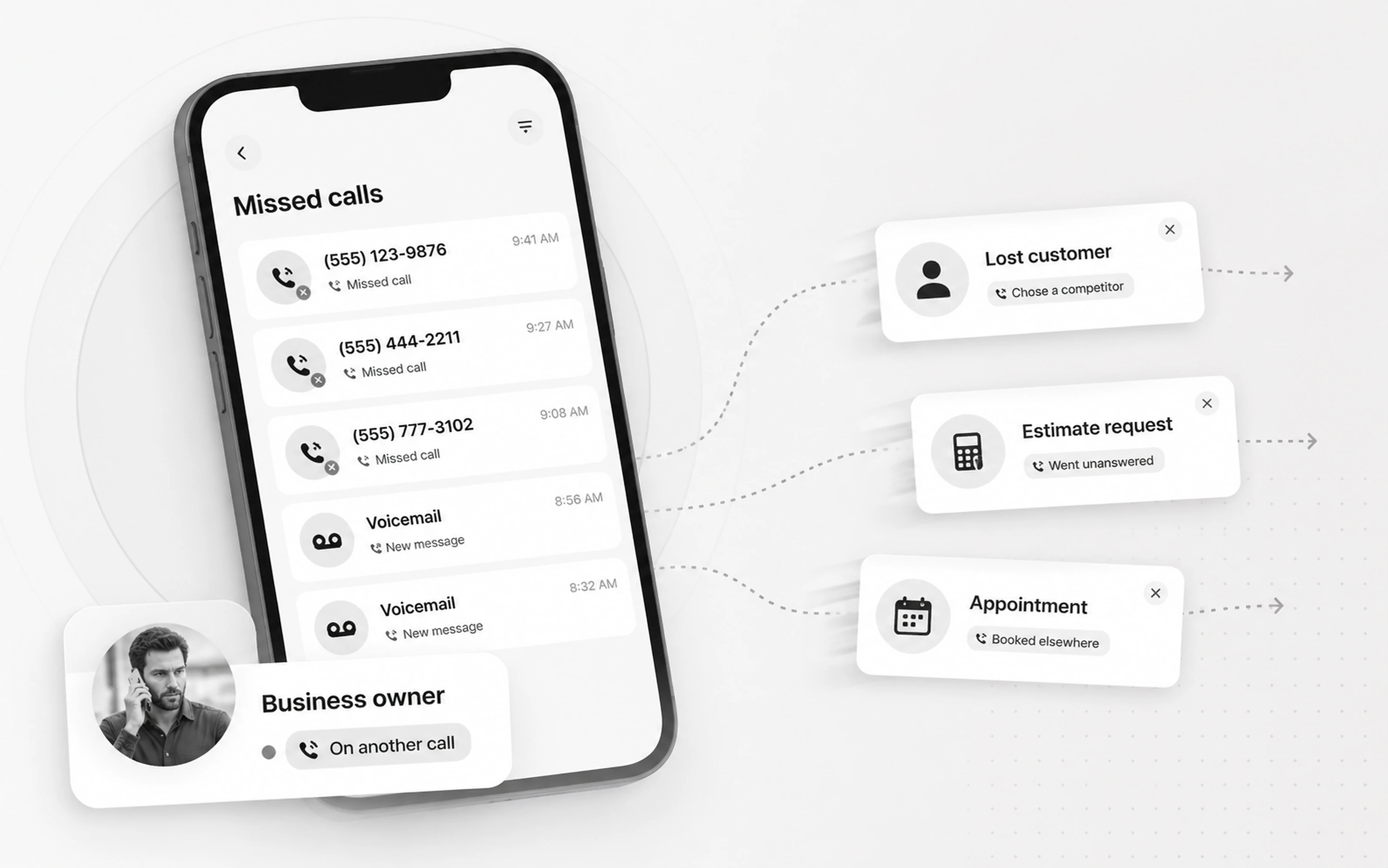
AI holds the call and books the lead; voicemail asks the caller to wait
AI answers instantly on the first ring; voicemail forces callers through long rings
AI qualifies leads and screens emergencies; voicemail collects unstructured audio
At-a-glance comparison
| Answering Characteristic | AI Receptionist (LobbyStack) | Standard Business Voicemail |
|---|---|---|
| Caller Experience | Interactive natural dialogue: asks questions and resolves issues | Passive 'record-and-wait' beep: forces callers into phone tag |
| Lead Drop-Off Rate | Keeps callers actively engaged and committed during the conversation | Many cold prospects hang up without leaving useful audio |
| Intake & Qualification | Collects location, urgency, symptoms, and verified contact info | Unstructured messages, often missing critical contact or job details |
| Direct Appointment Booking | Secures firm bookings on your live calendar immediately on-call | Impossible; requires multiple manual callback attempts to schedule |
| Emergency Screening | Identifies critical issues and initiates immediate warm transfers | Sits quietly in an inbox until someone manually checks it hours later |
| Spam & Answering Filtering | Blocks robocalls, dialer spam, and persistent unsolicited telemarketers | Fills your inbox with automated telemarketer or dialer recordings |
| Operational Cost | Starts at $0/mo (free plan); premium plans pay for themselves with 1 saved job | Free, but has a massive hidden cost in lost ready-to-book opportunities |
Caller experience: immediate active resolution vs. passive record-and-wait
The core difference between these two systems lies in consumer psychology and direct engagement. When a customer reaches a traditional voicemail box, they hear a generic, static greeting and are forced to leave an unstructured message. They receive no feedback, no confirmation of when you will return their call, and no immediate support. An AI receptionist like LobbyStack welcomes the caller with a natural, professional voice, answers their specific questions about your services, gathers their intake details (like zip code, issue severity, and contact info), and calendars their appointment. The entire interaction is structured, immediate, and leaves the caller with a booked slot and an instant SMS confirmation.
- AI: Greets on the first ring, answers questions, qualifies urgency, and schedules in real time
- Voicemail: Forces the caller through long rings and leaves them waiting indefinitely for a response
- Engagement: Callers receive immediate, satisfying resolution rather than a dead-end message box
The hang-up problem: how voicemail leaks ready-to-book leads
In today's fast-paced, digital-first marketplace, convenience is the ultimate competitive advantage. Many ready-to-book callers who reach a business's voicemail will hang up without leaving a message, especially when the need is urgent or they found you through local search. Instead of waiting, they press the back button on Google or Apple Maps and click the very next listing. If your business depends on organic local search, local services ads (LSAs), or pay-per-click advertising, sending calls to voicemail means you may be paying to generate leads for your direct competitors. An AI receptionist acts as a safety net, capturing and scheduling these high-intent buyers before they can navigate away.
- Drop-off: Many ready-to-buy leads hang up when routed to voicemail
- Competitors: Callers who reach voicemail will call the next local business in search results
- Retention: Keeping callers on the line secures their commitment and stops the search process
When voicemail is adequate: low-stakes calls and pre-existing relationships
Voicemail remains a perfectly adequate, cost-effective tool for low-stakes or internal communications where immediate response times do not impact revenue. If your incoming calls are primarily from known vendors, colleagues, existing business partners, or internal staff, speed is rarely a critical factor. These callers have established relationships with your team and are highly likely to leave a detailed message and patiently await your response. However, if your phone line is your primary engine for new customer acquisition and lead capture, relying on voicemail is a massive, ongoing drain on your bottom line.
- Low Urgency: Ideal for non-revenue-generating calls, vendor relations, and internal team coordination
- Established: Known clients who have deep trust and are comfortable waiting for a callback
- Constraint: Safe when business growth is not dependent on capturing new phone inquiries
The financial ROI: calculating how AI receptionists pay for themselves
While traditional voicemail is virtually free, its hidden opportunity cost can be high. If your average job or booking value is $300, and your voicemail causes just three callers a month to hang up and book a competitor, your business is losing $900 in monthly revenue. By replacing voicemail with LobbyStack, those missed calls can become booked appointments. LobbyStack's free tier handles initial testing at zero cost, and premium plans can be covered by a single saved job.
- Lost Revenue: Voicemail drop-offs represent thousands of dollars in lost annual earnings
- Immediate ROI: Converting even one additional lead per month covers the platform's cost for months
- Efficiency: Drastically lowers your average cost-per-acquisition (CPA) on marketing campaigns
Pragmatic transition: using AI overflow and after-hours scheduling
Migrating from traditional voicemail to a conversational AI receptionist does not have to be an all-or-nothing decision. You do not need to replace your entire phone system overnight. Many businesses start by deploying LobbyStack as an after-hours answering service or an overflow handler during the day. If your team is in a meeting, driving to a job site, or helping an in-person customer, the call silently rolls over to LobbyStack after two rings. The AI handles the booking or qualifies the lead, and your team receives a structured summary, allowing you to focus on your work without missing a single dollar.
- After-Hours: Capture valuable evening and weekend leads while your office is closed
- Overflow: AI steps in only when your lines are busy or rings go unanswered for too long
- Paced Growth: Test the conversational flow and scheduling success on our free plan first
Questions about AI receptionists vs voicemail
How does voicemail cost a business revenue compared to an AI receptionist?
Voicemail is a passive 'record-and-wait' system. Many small business callers who reach voicemail hang up without leaving a useful message, especially when they have an urgent need or found the business through local search. In service industries like plumbing, locksmithing, and HVAC, callers are often facing an immediate problem and will click the next listing in Google Business Profile or search results until someone answers. An AI receptionist improves capture by answering on the first ring, holding an active conversation, qualifying urgency, and booking directly into your calendar.
Can an AI receptionist replace voicemail entirely for after-hours calls?
Yes, and for most businesses, after-hours is where the transition yields the highest ROI. Instead of callers leaving a message at 9:00 PM and waiting for you to follow up at 8:00 AM the next morning (by which time they may have already booked a competitor), LobbyStack answers, registers their issue, books their service call for the morning, and sends them an automated confirmation text. Your schedule is filled before you even open your laptop.
What happens if a caller just wants to leave a brief message?
LobbyStack handles message-taking cleanly. If a caller chooses not to book an appointment or has a non-standard request, the AI receptionist acts as an organized message taker. It captures their name, verified phone number, best callback time, and a structured description of their request. It then transcribes the message and sends a notification to your team via email or SMS, presenting a clean dashboard entry with the full transcript and audio recording.
Is an AI receptionist difficult for older callers to use?
Not at all. LobbyStack is designed to be conversational and completely natural. It does not force callers to navigate complex, frustrating press-button phone trees ('Press 1 for service, press 2 for billing...'). Instead, the AI greets the caller with a natural, professional voice and asks, 'How can I help you today?' Callers speak exactly as they would to a human receptionist, and the AI interprets their intent, answers their questions, and guides them through booking or message-taking effortlessly.
How does the ROI of an AI receptionist compare to the cost of a free voicemail?
While voicemail is technically free, its opportunity cost can be high. If your average job value is $250, and voicemail causes just two callers a month to hang up and call a competitor, you are losing $500 in monthly revenue. LobbyStack starts with a free tier and offers premium plans that can cost less than a single lost job. Capturing even one additional caller per month can make the platform easy to justify.
Can I use both voicemail and an AI receptionist together?
Yes. You do not have to fully decommission your voicemail. You can configure LobbyStack to handle specific types of calls (such as service bookings, emergency screening, and after-hours coverage) while routing other paths (like direct team-member extensions or known personal callers) to a standard voicemail inbox. LobbyStack integrates flexibly with your existing business phone setup.
How does LobbyStack prevent fake or spam bookings from cluttering my calendar?
LobbyStack includes strict verification and qualification steps. Before booking an appointment, the AI receptionist qualifies the lead by verifying their location (to ensure they are within your service area), confirming their contact details, and validating their intent. We can also configure a double-opt-in confirmation code via SMS to ensure the caller is using a valid, reachable mobile number before the appointment is finalized on your schedule.
How do I know what happened on a call without listening to the entire recording?
LobbyStack saves you hours of review time by automatically generating highly accurate, bulleted call summaries. Immediately after a call ends, you receive a notification with a 2-sentence overview, list of key actions (like a booked appointment or urgent transfer), and structured caller details. You can view the full transcript in seconds if you need specific details, or listen to the high-quality recording directly from your dashboard.
Does LobbyStack work on weekends and holidays?
Yes, 100%. LobbyStack operates 24 hours a day, 7 days a week, 365 days a year with zero downtime. It never calls in sick, never takes a holiday, and can handle dozens of calls at the exact same moment on Christmas Eve just as easily as a quiet Tuesday morning, giving you complete peace of mind that your business is always open.
Stop sending high-intent buyers to voicemail
LobbyStack greets callers, answers their specific questions, qualifies lead status, and books them directly to your calendar 24/7.
No credit card required. Cancel anytime.